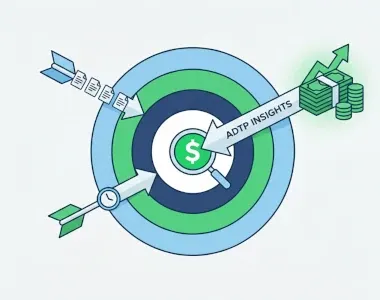
For many small and medium-sized businesses (SMBs), extending trade credit to customers is essential for growth. But how can you ensure you’re making informed credit decisions and minimizing risk? One often-overlooked tool is participation in trade payment exchanges, such as those operated by Dun & Bradstreet, Creditsafe and Experian.
These networks offer a wealth of information to help you make informed credit decisions. The information can be used to lower Average Days To Pay (ADTP), reduce Days Beyond Terms (DBT), and minimize fraud. However, accessing and utilizing these exchanges can be a challenge.
Why Trade Payment Exchanges Are Essential
In an increasingly interconnected economy, businesses face growing challenges in managing their customer data and credit risk. Inaccurate data, late payments and defaults can have ripple effects across supply chains. Trade payment data exchanges provide a robust solution to these challenges by enriching customer data, enhancing transparency, and facilitating informed decision-making.
By participating in a trade payment exchange, businesses protect their own financial interests. They also help their customers build their credit scores, and they contribute to a more stable and trustworthy economic environment. The benefits make these exchanges indispensable for companies of all sizes. Just some of those benefits include:
- Cleaner customer list. Internal customer lists can be cleaned and enriched using the legal names, subsidiary relationships, office addresses, industry codes, etc. provided by Creditsafe, Dun & Bradstreet, Experian, etc.
- More informed credit decisions. As a data contributor to exchanges, you are given insights into how well (or poorly) your customers pay other suppliers. Better decisions accelerate order-to-cash and reduce days sales outstanding (DSO) and days beyond terms (DBT).
- Mitigate fraud. The average business loses 5% of revenue to fraud, which could be “hiding” in places like bad debt. Insights from exchanges help identify customer and payment fraud.
How Trade Payment Exchanges Work
Trade payment, or trade credit, exchanges operate on a "give-to-get" model. Businesses contribute accounts receivable (AR) aging statements, a snapshot of who owes you money. The data are pooled and anonymized, creating a more complete view of customer payment behavior across many suppliers and industries.
In return for contributing data, participants gain access to business customer information, and how well your customers are paying their other suppliers. The combination of insights helps maintain golden customer records and assess the creditworthiness and payment risks of your customers.
Burdens of Manual Participation
While the benefits of trade payment exchanges are clear, the traditional participation process is often cumbersome and time-consuming for SMBs. Here's a breakdown of the typical steps and the associated challenges:
1. Data submission is manual or requires custom development
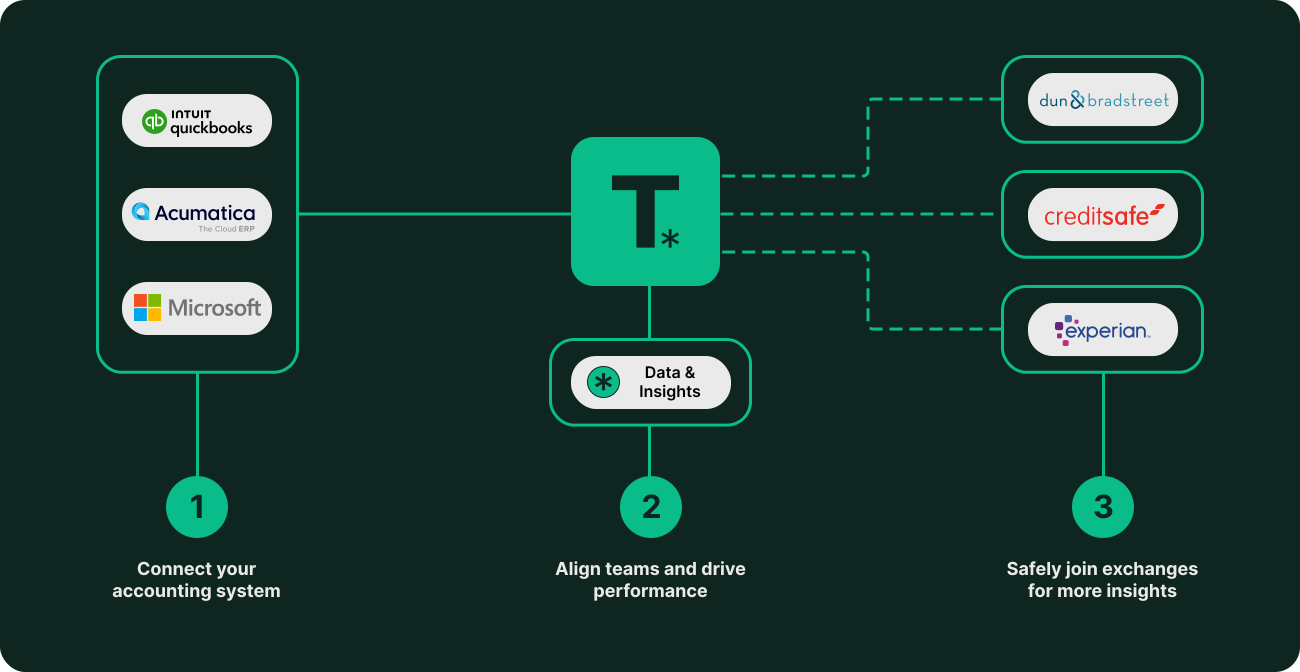
Businesses must regularly extract and submit their AR aging statements from their accounting system (QuickBooks, Acumatica, Microsoft Dynamics 365 Business Central, etc.). Then the extracted data need to be formatted according to the exchange's specifications, and each credit bureau has its own specifications.
2. Ongoing monthly maintenance
Participation isn't a one-time task. Companies must submit updated A/R files every month to keep their credit insights current. This requires ongoing effort from accounting and credit management teams who are already juggling multiple responsibilities.
3. No feedback loop to accounting systems
Even after investing time in submission, the insights provided by trade credit exchanges are typically available only through web-based dashboards or PDF reports. Businesses must manually review and cross-reference these insights with their accounting systems, creating more work rather than streamlining operations.
The Impact on Your Business
For already busy teams, participating in trade credit data exchanges adds yet another process to their workload. The manual nature of participating in trade credit exchanges creates several challenges for SMBs:
- Time-consuming: Preparing and submitting data each month takes valuable time away from credit management teams, who are likely already stretched thin.
- Error-prone: Manual data handling increases the risk of errors, potentially leading to inaccurate credit assessments and lost revenue.
- Difficult to use the insights: The inability to seamlessly integrate credit data back into accounting systems limits its usefulness and creates additional manual work.
- Missed opportunities: Many SMBs simply avoid participating in trade credit exchanges due to these complexities, missing out on valuable insights that could improve their credit management.
Truverto Simplifies and Secures Trade Data Exchange Membership
Truverto eliminates the manual effort and complexities associated with trade credit data exchanges and inserts the results back into your workflow. Our SaaS platform seamlessly integrates with your accounting software and automates the entire process:
- Automated Data Extraction: Truverto automatically extracts the necessary data from your accounting system or ERP with apps for Intuit QuickBooks and Microsoft Dynamics 365 Business Central, eliminating manual report generation.
- Automated Formatting and Submission: Truverto automatically formats the data according to the credit bureau's requirements and securely submits it on your behalf.
- Automated Monthly Updates: Truverto handles the monthly data updates, ensuring your credit information is always current.
- Enrich Customer Records: Truverto finds the best insights across multiple data sources. Then Truverto enriches customer lists in accounting systems automatically, empowering data-driven credit decisions directly within existing workflow.
- Save Time and Reduce Errors: By automating the process, Truverto eliminates manual effort and ensures accurate, up-to-date customer data.
With Truverto, SMBs can enjoy the benefits of trade credit data exchanges—improved credit decision-making, faster payments, and reduced risk—without the administrative burden.
By Brian Suthoff · November 25, 2025 · Updated June 3, 2026