Cash is oxygen for any business, and especially for small businesses who usually find it harder to issue debt or secure loans. Making sales and issuing invoices does not immediately generate cash, payments on those invoices still need to be collected. To say it in accounting-speak, accounts receivables need to be converted to cash.
As an accountant or credit manager, you can boost your value to an organization by shortening this gap. For decades, the primary tool for measuring this performance has been Days Sales Outstanding (DSO). However, relying solely on DSO is both confusing and dangerous as business moves faster. DSO is a macro-level metric mistakenly being used for micro-level decisions. It can lead you and your company astray.
DSO Is Probably Not What You Think
The term "Days Sales Outstanding" suggests the result tells you the exact number of days a sale remains unpaid. If you see a DSO of 25, you might assume it takes an average of 25 days to collect a payment.
But that is not what DSO measures.
DSO does not measure customer behavior; it measures portfolio balance. A DSO of 25 simply means the amount of money currently sitting in your accounts receivable is equal to 25 days of your average daily sales.
DSO = accounts receivable / average sales per day
Putting a company’s accounts receivable into context that way is helpful when doing financial statements analysis. It’s easy enough, at least for public companies, to get the required numbers from the balance sheet and income statement. Then an analyst can use differences in DSO to develop some insights into the asset structure and sales mixes of different companies.
Tracking DSO is also helpful within your own company, especially since when you separate credit from cash sales. If DSO goes down one month, your company may have less money tied up in accounts receivable.
Or you might be experiencing the greatest flaw of DSO: its sensitivity to sales volatility. Imagine your sales team closes a massive deal in the final three days of the month. Your total revenue for the period spikes. Because that new revenue is now the denominator in the DSO formula, your DSO will suddenly "improve" (drop), even if your collections team hasn't picked up a single new check.
Average Days To Pay (ADTP)
If DSO is a "snapshot" of the current state of your balance sheet, Average Days to Pay (ADTP) is a "video" of your customers' actual habits.
ADTP focuses exclusively on closed transactions. It looks at the invoices that have already been paid and calculates the exact duration between the day the invoice was generated and the day the funds were settled.
In a simple average, every invoice is treated equally. But in a business environment, all invoices are not created equal. Computing a weighted average is much better than a simple average, and you’ll sometimes see this metric as WADTP, but we still use the shorter acronym.
ADTP = Σ(Payment Amount * (Pay Date - Invoice Date)) / Σ(Payment Amounts)
Consider this scenario: Customer A pays a $1,000 invoice in 10 days and Customer B pays a $10,000 invoice in 60 days.
A simple average would suggest your "Days to Pay" is 35 days. However, the weighted average is 55.4 days, and better captures your actual cash flow. Relying on the simple average would lead you to believe your cash position is 20 days stronger than it actually is.
ADTP works across any time period. It handles partially paid invoices. It can be calculated for different groups of customers. You can and should calculate ATDP for each individual customer, which is critical for assessing customer risk and predicting when future payments will be received.
DSO vs ADTP Summary
| Feature | Days Sales Outstanding (DSO) | Average Days To Pay (ADTP) |
|---|---|---|
| Perspective | Macro/Financial: How much of total sales are "stuck" in AR? | Micro/Behavioral: How long does it actually take to get paid? |
| Data Source | Balance Sheet (AR) and Income Statement (Sales). | AR Sub-ledger (Individual paid invoice records). |
| Status of Invoices | Only includes unpaid amounts on invoices. | Only includes payments on invoices. |
| Sensitivity | Highly sensitive to sales spikes (a big sales month makes DSO look lower). | Resilient to sales spikes (it only looks at completed payments). |
| Primary Audience | Investors, CFOs, Banks. | Accountants, Collections Managers, Credit Analysts. |
Aligning Your Team Using Truverto
The challenge for many SMBs is that calculating ADTP and other metrics manually is an administrative and IT nightmare. It requires exporting large spreadsheets from your ERP, cleaning the data, and running complex pivot tables, only for the data to be outdated by the time the report is finished.
Seamless Integration, Real-Time Insight
Truverto integrates directly with the platforms you already use, with apps for Intuit QuickBooks and for Microsoft Business Central. Instead of manual calculations, Truverto automates the tracking of ADTP, ADL, and more at both the portfolio and individual customer level.
Bridging Internal and External Data
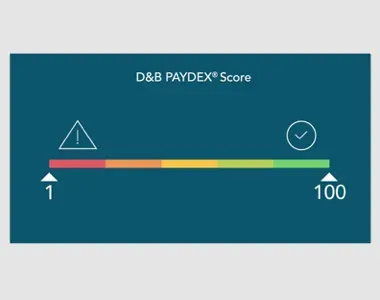
The most dangerous risk is the "hidden" risk, such as the customer who pays you on time but is currently defaulting on their other vendors. Truverto helps you assess customer risk by integrating internal payment behavior with external credit exchanges like Creditsafe, Dun & Bradstreet, and Experian.
By combining your internal ADTP data with external risk scores, Truverto helps you:
- Clean customer lists for error-free invoicing
- Mitigate customer default risk and fraud
- Align Finance, Sales and Executives around shared and trusted metrics
Conclusion: A More Trustworthy Economic Environment
In a fast-paced business environment, "gut feeling" and outdated metrics are no longer sufficient. Finance teams are the guardians of truth by owning data quality, structure, and metrics everyone can trust.
By moving away from the deceptive simplicity of DSO and toward the behavioral precision of Average Days to Pay (ADTP), you aren't just cleaning up a spreadsheet. You are creating a more transparent, predictable, and trustworthy economic environment for your business and your partners.
By Brian Suthoff · January 13, 2026 · Updated January 23, 2026